
Congregation of Jesus Mary Joseph
(JMJ)
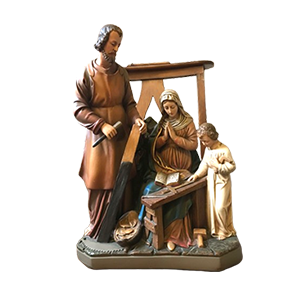
There are five stages in JMJ Formation - Aspirancy, Pre-novitiate, Novitiate, Temporary Profession and Ongoing Formation.
Aspirancy
Aspirancy is the first stage in the JMJ initial formation program. Gradual transition into the spirit, charism, life and mission of the Congregation takes place during this period. It’s a time of change, which enables the aspirant to deepen her understanding of discipleship that flows from personal relationship with JMJ - Directory on Formation 26Jesus Christ. The individual continues to discern God’s movement of grace and direction in her life and decides if she is called to religious missionary life in the Congregation of JMJ. Emphasis is given to her growth in the knowledge and love of Jesus Christ and responsiveness to the action of the Spirit in her life as a Christian.
In a climate of mutual respect, openness and trust, the candidate will be accompanied in her journey during Aspirancy by a dedicated formator. It is a time not only for the person to discover herself but also a time for the Congregation to discover more fully who she is. This period provides the aspirant and the Congregation opportunities for ongoing discernment of God’s call to the JMJ way of life.
Duration: Generally, the period of Aspirancy is one year. At times, an extension of up to one additional year may be requested by the aspirant or recommended by the Aspirant Directress.
Qualification: Intermediate/+2 /PUC equivalent and above
Pre - Novitiate
The period of pre-novitiate “is designed to help the pre-novices to grow in human and Christian maturity. During this stage, they reflect at depth, with conviction and in freedom, on how they are responding to God’s call to the religious life”. Pre-novitiate is a period which allows for a further deepening of the person’s understanding and living of the Christian life and the JMJ religious missionary life. The formation process continues with the person as she is. She discerns her vocation through a dynamic process. She enters into a deep process of self-discovery, of coming to see with the heart, to realize who she is and to recognize the will of God for her. This process empowers her and moves her towards a joyful commitment to consecrate her life totally to God for the universal mission of the Church as lived out in the Congregation of JMJ.
The pre-novice comes to recognize what elements in JMJ religious missionary life are non-negotiable. She allows herself to be accompanied throughout this process. The manner in which she responds to this formative process indicates her capacity to live the JMJ way of life. This is important for acceptance into the novitiate. Her life experiences enable her to develop the heart of a woman-disciple who is open to global realities and who is ready to live in intercultural communities which find their unity in Jesus Christ. The integration of all these aspects at this stage of formation happens in an atmosphere of prayer and silence, trust and love, truth and openness.
Duration: The period of pre-novitiate lasts for one year. It can be extended by no more than six months.
Novitiate
Religious life begins formally with the novitiate. The period of novitiate is 2 years. The novitiate experience provides an opportunity for the novice to deepen her commitment to prayer and community living, as well as her understanding of the charism and mission of the Sisters of JMJ. The purpose of the novitiate is twofold: 1) to deepen one’s relationship with Jesus and open oneself to the mystery of the Trinity in the experience of prayer, and 2) to grow in greater clarity of the theology of religious consecrated life and the meaning of the vowed commitment in the Church in today’s world.
This period of religious life generally does not exceed two years, and it is a mutual process of discernment between the novice and the Congregation to discern her call to the profession of vows.
First Year – The Canonical Year: For validity, the novitiate must comprise twelve months spent in the novitiate community. A novitiate is invalidated by an absence of the novice from the novitiate house for more than three months, continuous or broken, during the canonical year. Any absence of more than fifteen days must be made good. For a good reason and with the consent of the Superior General, the novice may undergo her novitiate in another house. In such a case, the novice receives special guidance from a professed member who will take the place of the novice's directress. The novitiate is a time of interiorization and of spiritual deepening, which promotes growth in personal relationship with Christ. Guided in prayer and meditation, the novice learns to appreciate silence and solitude as well as to make a certain break with the world.
The principal purpose of the canonical year is to strengthen the novice in the essentials of religious life, especially in the living of chastity, obedience, and poverty, and by prayer, study, and life in community, to enable her to learn the spirit and traditions of the Congregation and deepen her relationship with Jesus.
Second Year – The Non-Canonical Year: During the second year, the novice is sent for one month for a guided rural exposure programme and three months of community experience in one of the apostolic communities.
Period of Temporary Profession
At the end of the novitiate, the novice makes her first vows, which is also known as being admitted to temporary profession. These vows are initially for a period of three years and may be renewed for one, two or three years. The period of temporary profession is the second phase of the initial formation and has its special significance and importance for laying a strong foundation for living one's religious life. (Const. 83, 84). The period of temporary profession lasts six to nine years.
After the period of temporary profession, a sister makes known her decision to the Superior General to consecrate her life through perpetual profession. She commits herself for life by taking perpetual vows of consecrated chastity, evangelical poverty, apostolic obedience and becomes a permanent member of the Congregation of Jesus Mary Joseph.
The Period of Temporary Profession is a time of deepening integration of the consecrated life and preparing the sister for ministries of the Congregation. During this period, a temporarily professed sister reflects on her experience of prayer life, community and apostolic life, and searches for God’s will through an ongoing discernment that will lead her towards a lifetime commitment to God in JMJ. During this period, the temporarily professed sister reflects on her experience in prayer, community and ministry, and she seeks ongoing integration that will lead her to request to live her commitment for life as a sister of JMJ.
Ongoing Formation
The growth of vocation and the formation of a religious missionary is particularly an ongoing process of deepening her relationship with Christ. “Religious formation is progressive and ongoing. Every professed member is to continue diligently her spiritual, apostolic, doctrinal, and practical formation in a stable and sustained fashion. Superiors provide the sisters, at every stage, with resources and time for their ongoing formation. Ongoing formation takes place in every JMJ community. In ongoing formation, Sisters are engaged in lifelong learning with regular renewal of their lives and updating of skills for their ministries by deepening their prayer and community life.
Goals
To deepen one’s relationship with God and to integrate the contemplative and active dimensions of religious missionary life.
To continue to grow in spiritual and human maturity and to remain faithful to one’s commitment to Christ and mission.
To promote spiritual formation that leads to inner unity, flexibility and attentiveness to the daily events in personal life and in the world.
Objectives
Growing as an integrated person in her dynamic and progressive journey as a JMJ religious missionary embracing the cause of the Kingdom in favour of the poorest and the neediest.
Deepening of the theological aspect of the consecrated life, faithfully living evangelical vows, in fidelity to the spirit and charism of the Congregation.
Faithful living up of the Gospel values in daily activities, ready to live JMJ core values, integrating them into her religious missionary life, inter-cultural community and apostolic life.
Profound understanding of religious commitment to the values of JPIC and becoming an indispensable instrument for evangelization, responding to the cry of the poor and the cry of the earth.
Growing gracefully and joyfully, accepting the changes that happen in one’s life as she grows in age.